Fewer Lies, Better Health?

People Who Lied Less Reported Better Relationships, Improved Mental, Physical Health: Study

People who make an effort to lie less say they have better relationships and report fewer health complaints, according to new research.

"Our findings support the notion that lying less can cause better health through improving relationships," says researcher Anita Kelly, PhD, a professor of psychology at the University of Notre Dame. "Improvements in the relationships accounted for a significant improvement in health."

Although other research has focused on how to detect a lie or how often people lie, Kelly wanted to look at whether she could convince people to lie less, then look at the effects of less lying.

She presented her research at the annual meeting of the American Psychological Association in Orlando.

Our Lying Selves

On average, Americans lie about 11 times a week, says Kelly, citing surveys by others.

Some of those are whoppers. Other are white lies, often meant to spare feelings or save face.

Kelly and her co-researcher, Lijuan Wang, PhD, assistant professor of psychology at the University of Notre Dame, assigned 110 people, aged 18 to 71, to one of two groups.

Both groups came to the lab each week to take a polygraph test.

One group was encouraged to stop telling major and minor lies for the 10-week study. The researchers suggested strategies for lying less, such as declining to answer questions.

The comparison group got no special instructions about lying. They were simply told that they would have to tell the researchers how many lies they had told that week when they were given the lie detector test.

Each group answered questions about their close relationships and about their mental and physical health each week.

For instance, they reported if they had trouble falling asleep or had headaches.

Lying and Health: Study Results

Over the 10-week study, both groups lied less. However, the group told they couldn't lie told fewer lies than the comparison group.

By week 10, the no-lie group was telling, on average, less than one white lie, down from more than three in week two. The comparison group was still telling more than three, down from nearly six in week two.

Both groups reduced their major lies, but the no-lie group reduced those lies much more.

The link between less lying and improved health was seen in both groups, Kelly found.

"In a given week, if they told fewer lies, they also reported their health was better," Kelly says.

"The connection between lying less and improved health, following the people over 10 weeks, was amplified by being in the no-lie group,'' she says. "The connection was even stronger."

For instance, in a given week, if a member of the no-lie group reduced white lies by three, they had more than four fewer mental health complaints.

In the comparison group, if someone reduced their white lies by three, they had just two fewer mental health complaints, she says.

"When a given person was lying less, they also reported their relationships were better," she says.

That, she says, explains the link between lying less and better health.

Why? "What we are suggesting is, not violating others' expectation of honesty is likely to build trust, which may be key to good health through improving our relationships."

The study was funded by the John Templeton Foundation.

Fewer Lies, Better Health: Perspective

The findings echo some other research findings by Sally Theran, PhD, assistant professor of psychology at Wellesley College in Wellesley, Mass.

"My research on girls and boys ... indicates that the process of being authentic, or being honest and open in meaningful relationships, is significantly related to feeling less depressed and having higher self-esteem," she says.

Honesty is also related to feelings of intimacy in friendships, she has found. "There may be increased conflict, as a result of being open and honest, but it leads to better quality of friendships," Theran says.

Telling the truth can feel risky, she says, but when you do so, you can feel less inner conflict. "When we lie," she says, "it adversely affects our self-esteem and increases our sense of shame. So, it's not surprising at all that the authors found that telling the truth was related to all these positive outcomes."

Total Honesty Vs. Reality

Total honesty is not realistic,Kelly and Theran say.

"The goal is a reduction in lies," Kelly says

Theran distinguishes between major lies and white lies. This hit home recently when her 6-year-old daughter asked: "Is the tooth fairy really real?"

"In that case, in my opinion," Theran says, "a lie is OK."

"There are different motives for lying -- to protect a child's sense of magic is one thing, but it's another thing to tell your boss that you've completed a project when you haven't."

These findings were presented at a medical conference. They should be considered preliminary, as they have not yet undergone the "peer review" process, in which outside experts scrutinize the data prior to publication in a medical journal.

By Kathleen Doheny
WebMD Health News
Reviewed by Louise Chang, MD
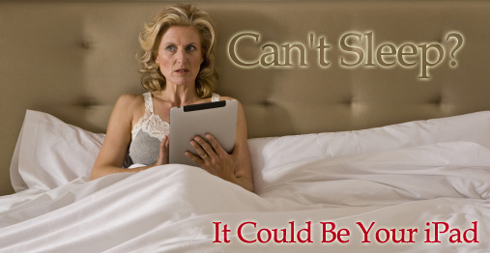

Can't Sleep? It Could Be Your iPad

Glow From Tablets at Bedtime May Make It Tougher to Sleep

Is setting down your iPad the last thing you do before bed? New research shows that all of those nighttime hours spent with your tablet can wreak havoc on your sleep.

The bright light emitted from these tablets can suppress melatonin. That's a hormone that helps control sleep and wake cycles, called circadian rhythms.

The researchers only looked at the iPad, iPad 2, and a tablet known as the Asus. Using these tablets for two hours on their brightest settings suppressed melatonin by about 22%. The findings appear in the journal Applied Ergonomics.

“If they are bright and they are big and are close to your eyes, they have more potential to disrupt your melatonin than the TV, which is usually farther way,” says researcher Mariana Figueiro. She is an associate professor at Rensselaer Polytechnic Institute in Troy, N.Y.

iPhones and other small gadgets may not affect circadian rhythms. “Smaller devices emit less light,” she says. But even if these devices aren't zapping the body’s melatonin supply, they may still be disrupting sleep by delaying your bedtime, she says.

Not ready to give up your tablet before bedtime? Follow these four tips to make sure you use them in a way that does not leave you tired all day long.

1. Invest in a Filter
Inexpensive filters can help turn down the glare and block out melatonin-zapping blue light, says Figueiro. Look for one that cuts off wavelengths below 520 nanometers (nm). “You can still see the screen and do your task, although the color is compromised.”

2. Dim the Lights

In the study, participants used the tablets at full brightness, but you don’t have to, she says. “Use the automatic dimmer function at night,” she says. Turn off the lights in your bedroom as well.

3. Distance Yourself From Your Tablet

“Proximity is an issue,” says Michael Breus, PhD. “When we use these devices, we hold them closer to our face than we would a TV or a computer.”

4. Impose an E-Curfew

“These devices are faking out our body and saying it’s morning when it’s night,” Breus says. This disruption in circadian rhythms can affect learning among school-aged children. “Impose an electronic curfew,” he suggests.

By Denise Mann
WebMD Health News
Reviewed by Louise Chang, MD

20 Secrets for Beautiful Hair

Tired of dull, lifeless locks? Here are the best ways to get the hair you've always dreamed of.

Boost Thin Hair with Silicone

Thin, lifeless hair is one of the most common hair complaints, yet few women know the best remedy. Heavy conditioners just leave hair limp. A better bet is to use products with silicone, such as dimethicone or cyclomethicone. These coat the strands with a thin film, creating fuller hair that doesn't look greasy. The silicone stays put even after you rinse.

Eat Fish and Nuts for Healthy Hair

The same nutritious foods that are good for your body promote stronger, healthier hair. The protein and omega-3 fatty acids in salmon and nuts produce a healthier scalp. Nutrients found in leafy vegetables, beans, and carrots are also good for your hair. Beware of fad diets aimed at quick weight loss. Deficiency of some nutrients, such as zinc, biotin, or protein, can lead to brittle hair or hair loss.

Protect Shine with Lukewarm Water

Hot water can strip the scalp of sebum, which is the protective oil that acts as a natural conditioner and gives hair its shine. This doesn't mean you have to suffer through cold showers to avoid dull hair. Instead, use lukewarm water to wash your hair. Pamper the scalp by massaging it while you shampoo.

Mend Split Ends with Protein

Frequent hair styling, coloring, bleaching, or perming can damage hair's protective outer layer, known as the cuticle. The result is what we call "split ends." Thankfully, there are hair products to help mend the damage. Look for conditioners that contain protein. They actually penetrate the hair shaft and repair split ends. The fix only lasts until the next shampoo, so you'll need to use it regularly.

Get that 'Redhead Bounce'

The fullness of your hair is in your genes -- and your styling technique. Natural redheads have thicker hair, while blondes have the thinnest but greatest number of hairs. Luckily, you can enhance your hair's volume whatever its color. Use a leave-in conditioner or mousse and dry the root area first. If your hair is very fine, use a low-heat setting when drying, curling, or straightening.

Don't Treat Dandruff with Oils

Dandruff isn't caused by a dry scalp, but by an inflammatory process that affects the scalp. Rubbing oil into the scalp can make the inflammation worse, resulting in more unsightly white flakes. That's why medicated shampoos -- either over-the-counter or from a dermatologist -- can best treat dandruff. Just be sure to rinse thoroughly after using medicated shampoo.

Skip High-Powered Blow Dryers

You might expect a blow dryer with higher wattage to slice a few precious minutes off your styling routine. But in a comparison of blow dryers, Consumer Reports found they all dried hair in about the same amount of time. Some are much noisier than others, though. The consumer research group found the more expensive dryers were the quietest, and the noisiest were as loud as a lawn mower.

Brush Less to Limit Hair Loss

Don't believe that myth about 100 brush strokes a day. Too much brushing will snap off hairs. Some hair loss is normal -- most people lose an average of 50 to 100 hairs every day. These are hairs that have stopped growing and have reached the resting stage. To minimize additional hair loss, use a brush with ball-tipped bristles and avoid brushing while the hair is wet.

Avoid Styles that Damage Hair

Tight ponytails and braids can break off hair and damage the hair follicle. Continuous pulling can even lead to hair loss. Extensions add weight to the hair and also put pressure on the follicle. Dermatologists recommend wearing extensions for no more than three months. Also, be aware that wet hair is more fragile, so you shouldn't put your hair in braids or a ponytail while it's wet.

Don't Let Brands Clean Your Wallet

What are you really getting for extra money spent on specialty products? They may contain natural botanicals, but that may not mean better style. Consumer Reports tested products on 1,700 ponytail samples and found that the more expensive shampoos didn't perform better than cheaper ones. What is important: Choose shampoos and conditioners designed for your hair type, such as those for oily, fine, or color-treated hair.

Use Gentle Color to Cover Grays

Hair doesn't only go gray as we get older -- it also becomes weaker and grows more slowly. That means damaged hair won't be snipped off as quickly by haircuts. Chemicals used on "mature" hair should be weaker to avoid damage, says dermatologist Zoe Draelos, MD editor of the Journal of Cosmetic Dermatology.

Neutralize Frizz in Winter, Too

Humidity gets the rap for causing frizzy bad hair days. But there's more static electricity in low humidity. This means frizz also flies in winter months and in the desert climates of the Southwest. Use conditioner to neutralize the static electricity. Shampoos that are pH-balanced also can calm the frizz of chemically treated hair.

Keep Brushes Away from Your Curls

Curly hair is more likely to break and become dry and brittle. Gently using a pick keeps curls looking better than combing or brushing. Conditioners with polymers such as polyvinylpyrrolidone can smooth hair and make it more manageable. Don't overdo the use of flat-irons and relaxers, which can damage hair.

Avoid Extreme Color Changes

Perhaps you're a brunette who always wanted to be a blonde, or a blonde who wants to go darker. Be aware that you're risking damage to your hair with more extreme color changes. Some dermatologists recommend staying within three shades of your natural color.

Get the Facts About Hair Dye

Frequent dying can damage the hair, but it does not appear to harm your health. Most studies indicate no link between cancer and hair dyes, and in other studies the evidence is weak, the American Cancer Society says. The greatest concerns were raised about semi-permanent and oxidative permanent dyes that are dark brown or black. Consider using natural dyes such as henna.

Give the Blow Dryer a Rest

Frequent blow-drying is hard on your hair and can actually lead to hair loss. When you do blow dry, turn down the heat. Finer hair is especially sensitive to damage from heat, but even thick manes need some tender care. Protect your hair before styling by using a conditioner.

Protect Hair from the Sun

The sun is no kinder to your hair than it is to your skin. Sun exposure can dry out hair, especially if it's color-treated. Use a light hair spray with SPF protection -- or wear a hat when the sun is strongest. Frequent summer trims can keep your ends looking healthy.

Shower Before You Swim

Avoid chlorine damage by rinsing your hair before entering the pool. If your hair is already saturated with water, it won't absorb as much from the chemical-laden pool. Use a pH-balancing hair product to further protect your hair.

Take a Time Out from Styling

For better hair days, the best thing you can do is -- nothing. All the tugging, combing, brushing, drying, and chemically treating of hair damages the shafts. Even vigorous towel-drying can damage hair. If you have damaged hair, take a break from styling. As the damaged hair grows out, the new growth will be healthy.

Be Aware of Changes in Your Hair

Sudden changes in your hair, such as brittle hair or hair loss, could be a sign of a health problem. For example, hair loss can be caused by thyroid disease, iron deficiency, or an autoimmune disease. Some medications can cause hair loss, too. If you have a concern about changes in the condition of your hair, see a dermatologist.

REFERENCES:
American Academy of Dermatology
American Cancer Society
Consumer Reports
Journal of the American Academy of Dermatology
U.S. Food and Drug Administration
Zoe Draelos, MD, dermatologist, High Point, NC.

Noni & Anti Aging

As the age increasing, one notices the skin losing its glow and becoming dry and rough. This is due to decrease in the moisture content of the stratum corneum or to a decrease in the moisture content of the stratum corneum or to a decrease in vertical height of epidermal cells.

Decrease in the number of Langerhans cells decreases the skins immune response. The reduction of Melanin and decreased immunity increases the risk for tumorigenesis.

In elderly persons the dermis has a decreased density with fewer cells and blood vessels. The total amount of collagen decreases one percent per year in adulthood. Therefore the skin thickness decreases linearly with age after 20 the remaining collagen fibres become thicker, less soluble and more resistant to digestion by collagenase with age. Noni presents this.

The rate of nail growth also decreases with aging. Nail plates usually become thinner, more brittle and fragile. Hair graying occurs due to loss of functional melanocytes. Of course heredity also plays an important role in hair graying. A decrease in the number of hair follicles in the scalp increases baldness.

Collagen is one of the compounds of connective tissue which occurs not only within the dermis layer of the skin but also found in every organ and structure of human body. Connective tissue is composed of collagen fibres, elastic and the extracellular matrix but the amount and conformation of collagen is different in any given tissue.

Although flexible, collagen fibres offer a great resistance to any pulling force. Collagen fibres are fairly simple proteins and are made up of chains of amino acids. Amino acids are delivered from circulation to the cell called fibrocytes that manufacture collagen. The three important nutrients of collagen namely glycine, hydroxyproline, hydroxylysine are naturally present in Noni. Very rarely any other animal protein contains all the three of these nutrients.

With aging this collagen simply becomes metabolically inert. It loses its responsiveness, flexibility, fluidity, and strength. In the skin, the change in the quality of our collagen manifest as a loss of smoothness, plumpness, and luster. These changes are modifiable and largely preventable. Noni when used both internally and externally promotes the maintenance of healthy skin. The skin apart from protection also helps to absorb nutrients.

Noni because of its amphoteric nature that is the presence of fatty acid like linoleic acid as well as water, when applied externally aids healing of rashes, inflammation prickly heat, rosacens, or other allergic manifestations. These symptoms and allergy may be due to the release of histamine. Noni resists the release of histamine and protects the skin against allergies.


Healthy Wonders of Water

Stay Slimmer With Water

Trying to lose weight? Water revs up metabolism and helps you feel full.
Replace calorie-laden beverages with water, and drink a glass before meals to help you feel fuller.
Drinking more water also helps amp up metabolism - especially if your glass is icy cold. Your body must work to warm the water up, burning a few extra calories in the process.

Water Boosts Your Energy

If you're feeling drained and depleted, get a pick-me-up with water. Dehydration makes you feel fatigued.
Water helps the blood transport oxygen and other essential nutrients to your cells.
If you're getting enough water, your heart also doesn't have to work as hard to pump blood throughout your body.

Lower Stress With Water

Seventy to 80% of your brain tissue is water. If you're dehydrated, your body and your mind will be stressed.
If you're feeling thirsty, you're already a little dehydrated.
To keep stress levels down, keep a glass of water at your desk or tote a sports bottle and sip regularly.

Build Muscle Tone With Water

Drinking water helps prevent muscle cramping and lubricates joints in the body.
When you're well hydrated, you can exercise longer and stronger without "hitting the wall."

Nourish Your Skin

Fine lines and wrinkles are deeper when you're dehydrated. Water is nature's own beauty cream.
Drinking water hydrates skin cells and plumps them up, making your face look younger.
It also flushes out impurities and improves circulation and blood flow, leaving your face clean, clear, and glowing.

Stay Regular With Water

Along with fiber, water is essential to good digestion.
Water helps dissolve waste particles and passes them smoothly through your digestive tract.
If you're dehydrated, your body absorbs all the water, leaving your colon dry and making it more difficult to pass waste.

Water Reduces Kidney Stones

The rate of painful kidney stones is rising because people -- including children -- aren't drinking enough water.
Water dilutes the salts and minerals in your urine that form the solid crystals known as kidney stones.
Kidney stones can't form in diluted urine, so reduce your risk with plenty of water!


Generally, nutritionists recommend we follow the "8x8 rule."
Drink eight 8-ounce glasses of water a day.
You may need more water if you exercise or sweat heavily.
You may need less water if you drink other beverages often.